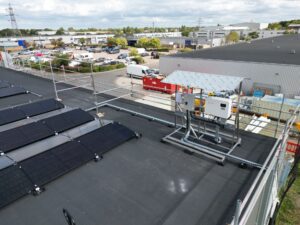
What Does a G99 Application Cost, and Who Pays for Network Upgrades?
What a G99 application costs in Northern Powergrid and SP Electricity North West areas, who pays for network upgrades, and practical ways to keep DNO charges down.






What a G99 application costs in Northern Powergrid and SP Electricity North West areas, who pays for network upgrades, and practical ways to keep DNO charges down.
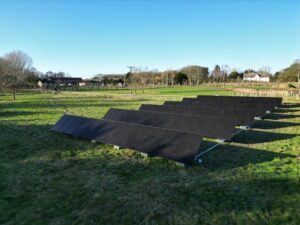
When your network operator caps export, a G100 scheme lets you fit more solar. How it works, how much bigger you can go and what gets curtailed.
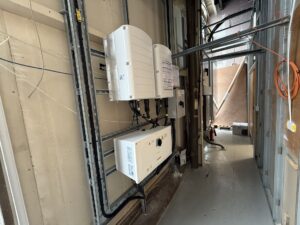
G98 or G99? The 16 A per phase limit decides it. When you can connect and notify, when you must apply first, and how batteries change things.
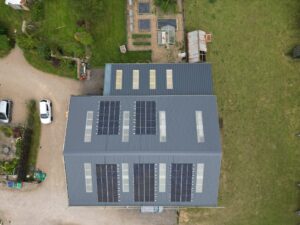
Asbestos cement roofs are fragile and shouldn’t be drilled for solar. Here’s how overcladding, re-roofing or a ground mount compare, with HSE guidance and checks.
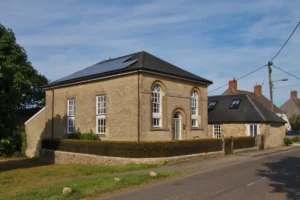
In the Church of England, solar panels always need permission under the faculty system. Unlisted churches outside conservation areas can use List B; listed ones need a full faculty.
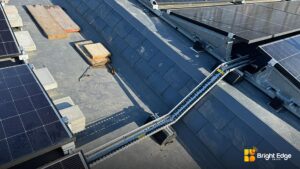
A ballasted system holds panels on a flat roof with weight instead of fixings, so the membrane is not drilled. It suits most commercial flat roofs if the structure and wind design allow.
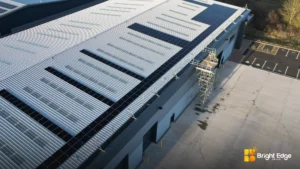
Most modern metal warehouse roofs can take solar. Before ordering kit, check the structure can carry the load, the roof will outlast the panels and the grid will accept the connection.
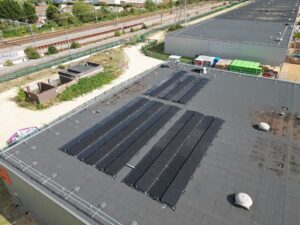
Buying outright usually gives the best long-term return. A Power Purchase Agreement means no upfront cost, and suits businesses short of capital that are sure of their building for the term.
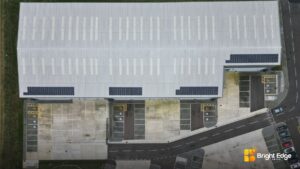
Battery storage pays when your site makes more solar than it uses by day and buys power back dear later, or has export limits or backup needs. Model it on half-hourly data.
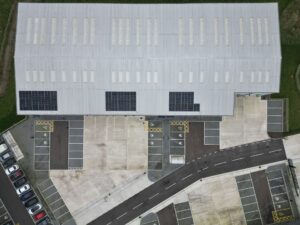
Most commercial rooftop solar systems cost about £17,000–£21,000 for 30 kWp, £28,000–£37,000 for 50 kWp and £50,000–£65,000 for 100 kWp, excluding VAT.
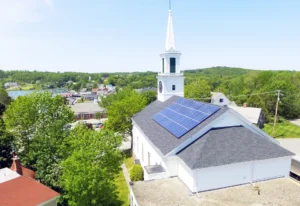
The Decarbonising Churches Grant Fund can pay for church solar panels and batteries, but only alongside low-carbon heating. What it covers, who qualifies and other routes.
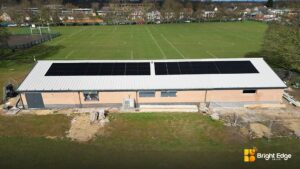
Charity solar panels and batteries are zero-rated for VAT until 31 March 2027, then 5%. What qualifies, what doesn’t, and how to get installed in time.